
Want Financial Freedom in 2025? Do This. [FULL BLUEPRINT]
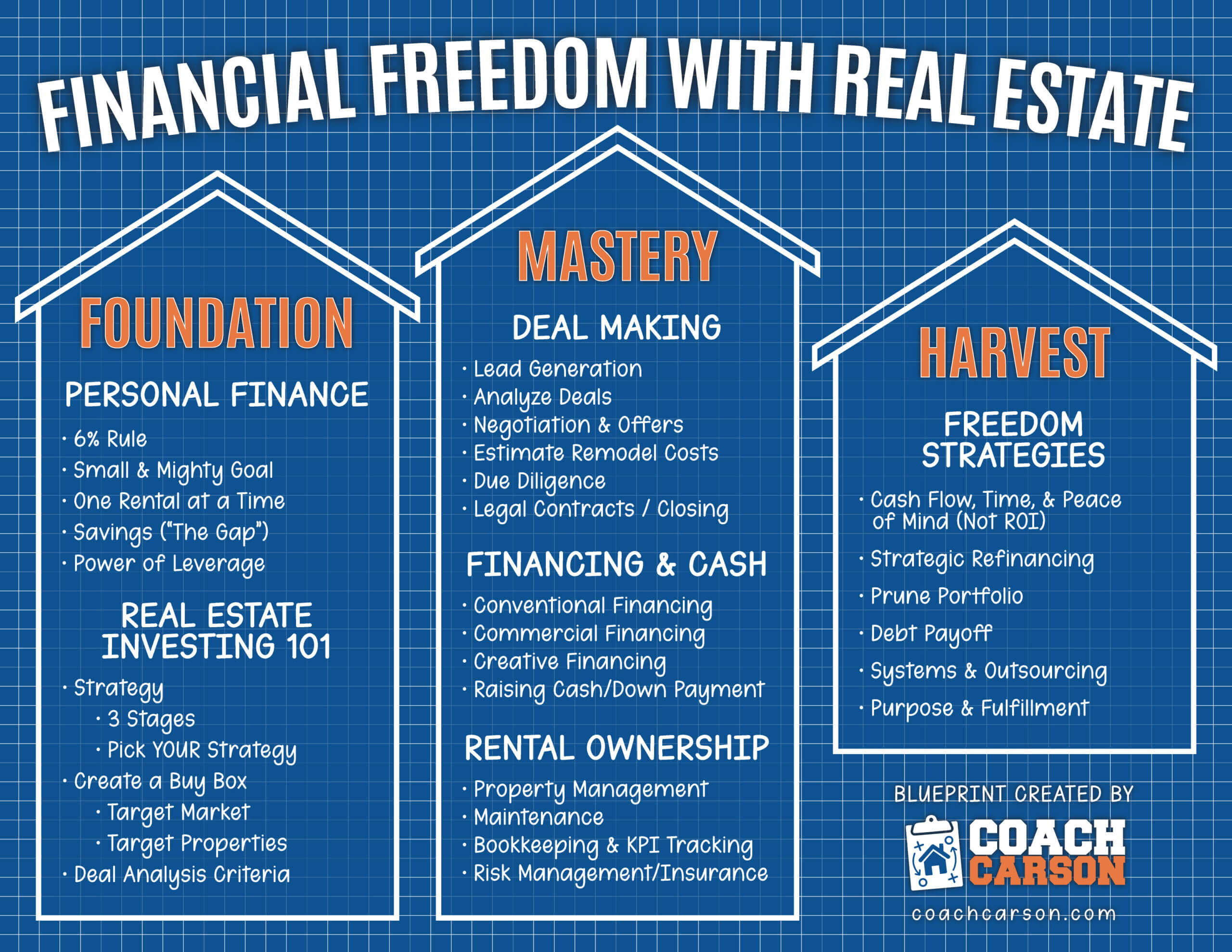
If I wanted to achieve financial freedom through real estate investing in 2025, what exactly would I do? This is the question I’ve been exploring on the Coach Carson podcast, and the blueprint I’m sharing today gives you a step-by-step path to get there.
Financial freedom means getting to the point where your investment income can pay all your bills without you having to work a job. When you achieve this, you’ll have a full bank account of the most valuable resource—your time. You’ll have the freedom to do whatever matters most to you and your family.
In this comprehensive guide, I’ll walk you through each step of this blueprint, from figuring out how much money you need to which properties to buy and how to manage them for long-term success.
Step 1: Calculate How Much Wealth You Need
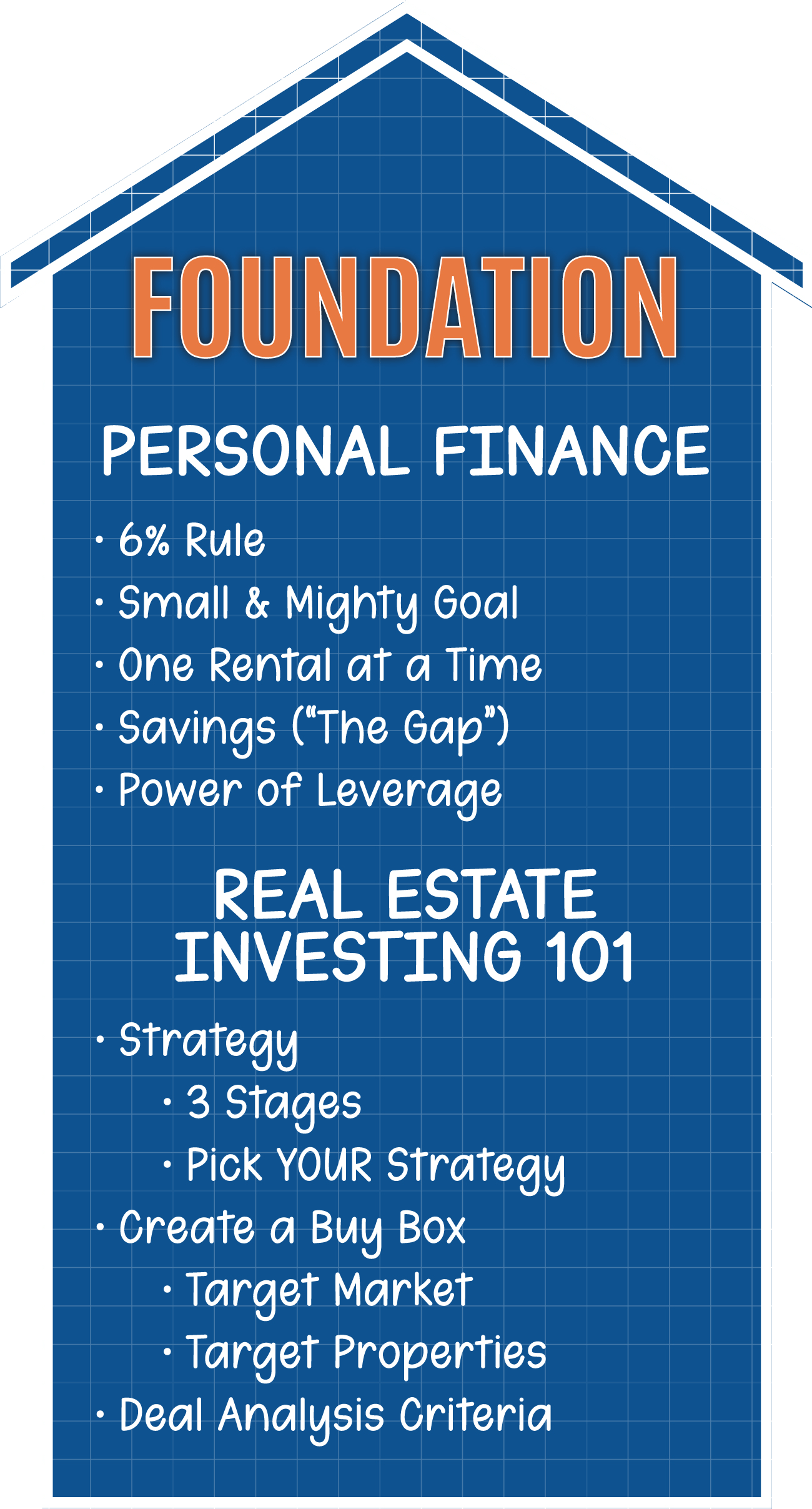
The first step in your journey to financial freedom isn’t even about real estate at all—it’s about personal finance. Specifically, it’s about determining how much wealth you need to achieve financial independence.
I want to give you a shortcut to figure this out for yourself called the 6% Rule. This is similar to the 4% rule that’s popular in the financial independence/retire early (FIRE) movement for stock investments, but adjusted for real estate.
Here’s how it works:
- Determine your annual income goal (your “FI number”)
- Divide that number by 6%

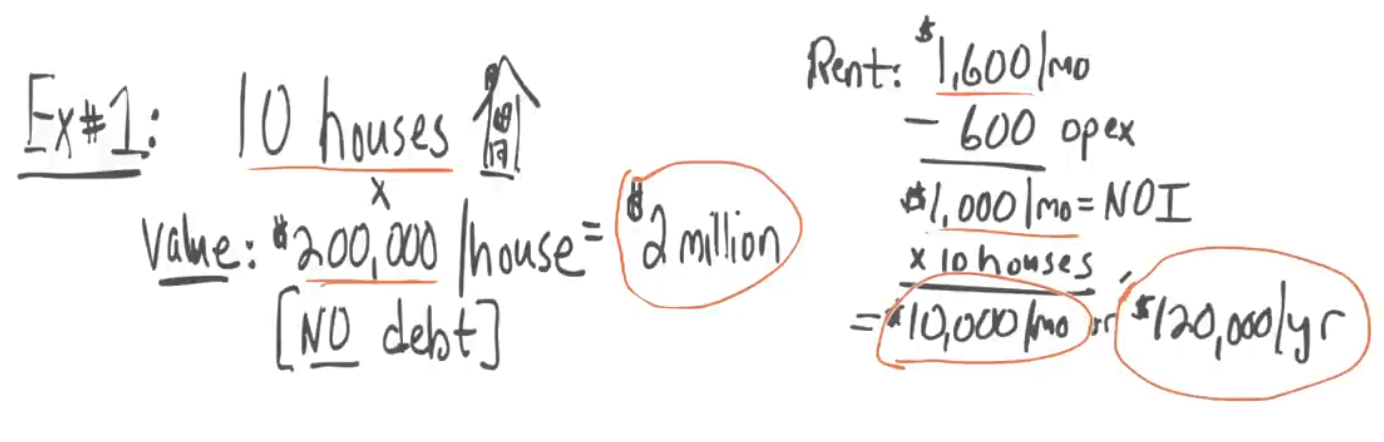
This means you would need to build approximately $2 million in real estate equity to generate $120,000 in annual income through real estate investments.
If you prefer to be more conservative, you could use a 5% rule instead:

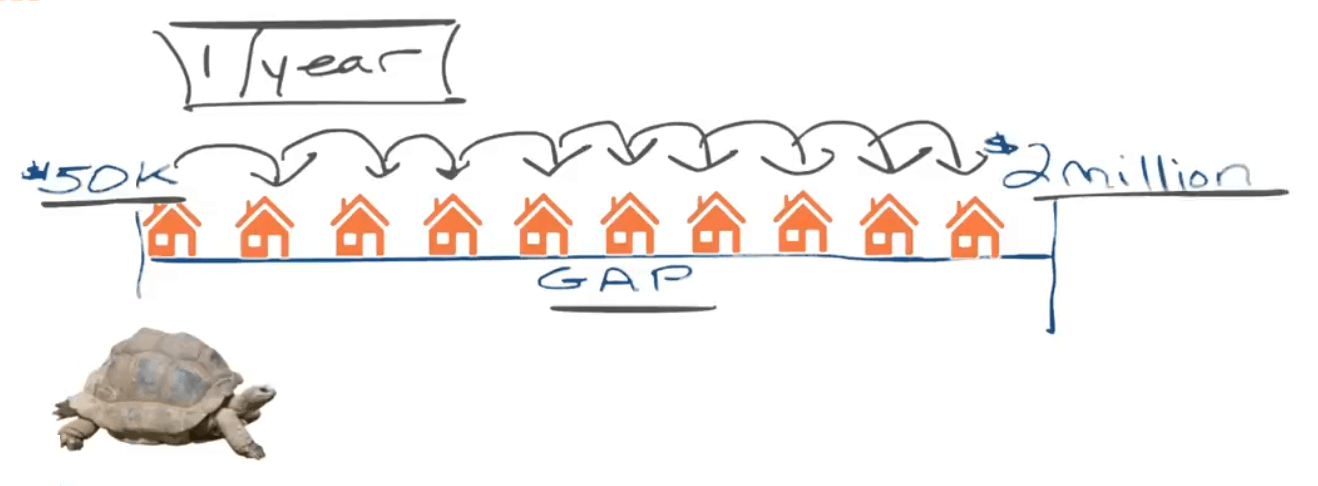
The purpose of this calculation is to show you the gap between where you are now and where you need to be to achieve financial freedom.
What Does $2 Million in Real Estate Actually Look Like?
Let me give you a couple of examples of what $2 million in real estate wealth might look like:
Example 1: Debt-Free Portfolio
Example 2: Portfolio with Mortgages
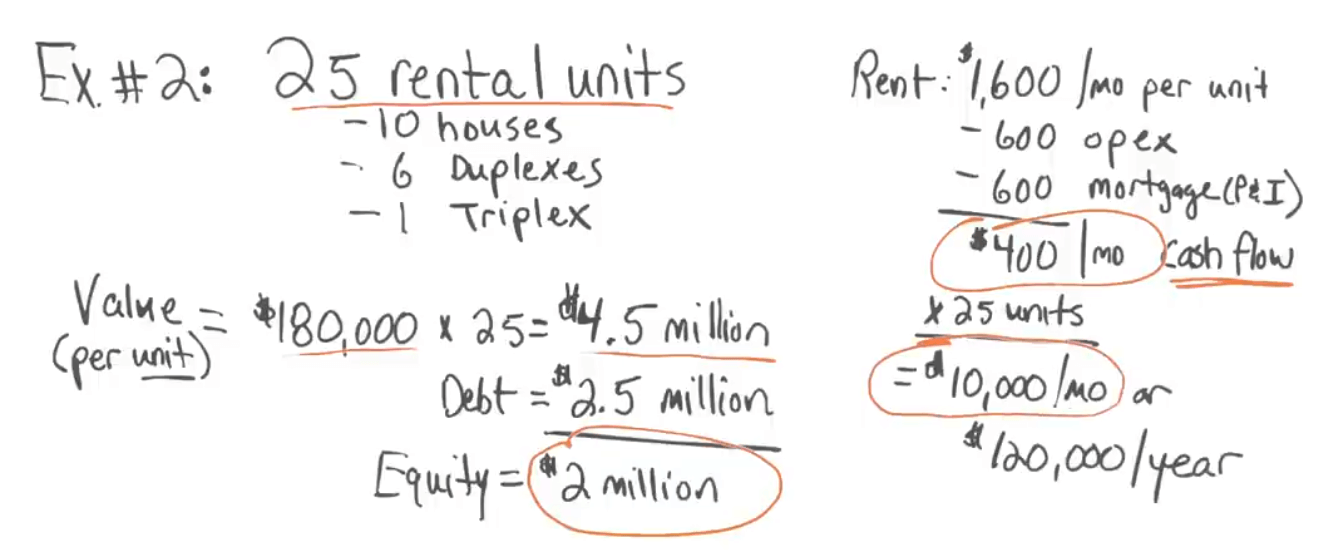
Both examples achieve the same income goal but with different approaches to leverage and property management.
Step 2: Close the Gap with One Property at a Time
Now that you know your financial target, how do you close that gap between where you are now and where you want to be? It may seem overwhelming, but the best approach is surprisingly simple: buy one property at a time.
I’m a fan of Michael Zuber’s book “One Rental at a Time” and John Schaub’s “Building Wealth One House at a Time.” Both emphasize the same approach—focus on acquiring one quality property, get it rented and stabilized, and then move on to the next one.
This is the tortoise approach to real estate investing, and it consistently beats the hare. If you just set a goal of one property per year and focus on that, you can’t help but build wealth over time.
There are two key tactics that will help you implement this approach:
Tactic 1: Increase Your Savings Rate
The gap between what you earn and what you spend is your savings rate, and it’s crucial for building wealth. As one of my mentors, Louis Stone, told me: “Learn to make $30,000 per year and live on $30,000 per year. Then learn to make $60,000 per year and still live on $30,000 per year. Then learn to make $120,000 per year and still live on $30,000 per year.”
If you can maintain discipline and create that gap between your income and expenses, you can’t help but become wealthy as you reinvest the difference.
Tactic 2: Use Leverage Safely
In real estate investing, you can safely use leverage (other people’s money) to accelerate your progress. Instead of having to save $300,000 to buy a $300,000 property, you can use $50,000 as a down payment and borrow the rest.
Some effective leveraging strategies include:
- House hacking (living in the property while renting portions)
- Using 20% down rental property loans
- The BRRRR strategy (Buy, Rehab, Rent, Refinance, Repeat
- Partnerships and creative financing
Using leverage can dramatically accelerate your timeline to financial freedom. With a conservative 15% return using safe financing, you might be able to achieve your financial goals in 12-15 years instead of 20+ years.
Step 3: Choose the Right Strategy for Your Phase
To figure out what strategy makes the most sense for you, it helps to identify which of the three phases of real estate investing you’re currently in:
The Starter Phase
The goal of this phase isn’t to hit home runs but to learn and build your network without making big mistakes. Good strategies include:
- House hacking
- Living in a property for a while, then renting it out
- Low-risk rental properties that need minimal work
The Builder Phase
This is where you’re trying to accelerate your return on investment and grow from a small amount of money to a large amount. Strategies include:
- The BRRRR method
- Fix-and-flip properties
- Short-term and mid-term rentals
- Continuing with strategies from the starter phase

The Harvester Phase
At this point, you’re focused on crossing the finish line of financial freedom. You want to:
- Pay off debt to decrease overall debt levels
- Sell low-quality properties and replace them with better ones
- Refinance remaining debts with fixed, low-interest, long-term loans
- Consider private lending or partnerships with newer investors
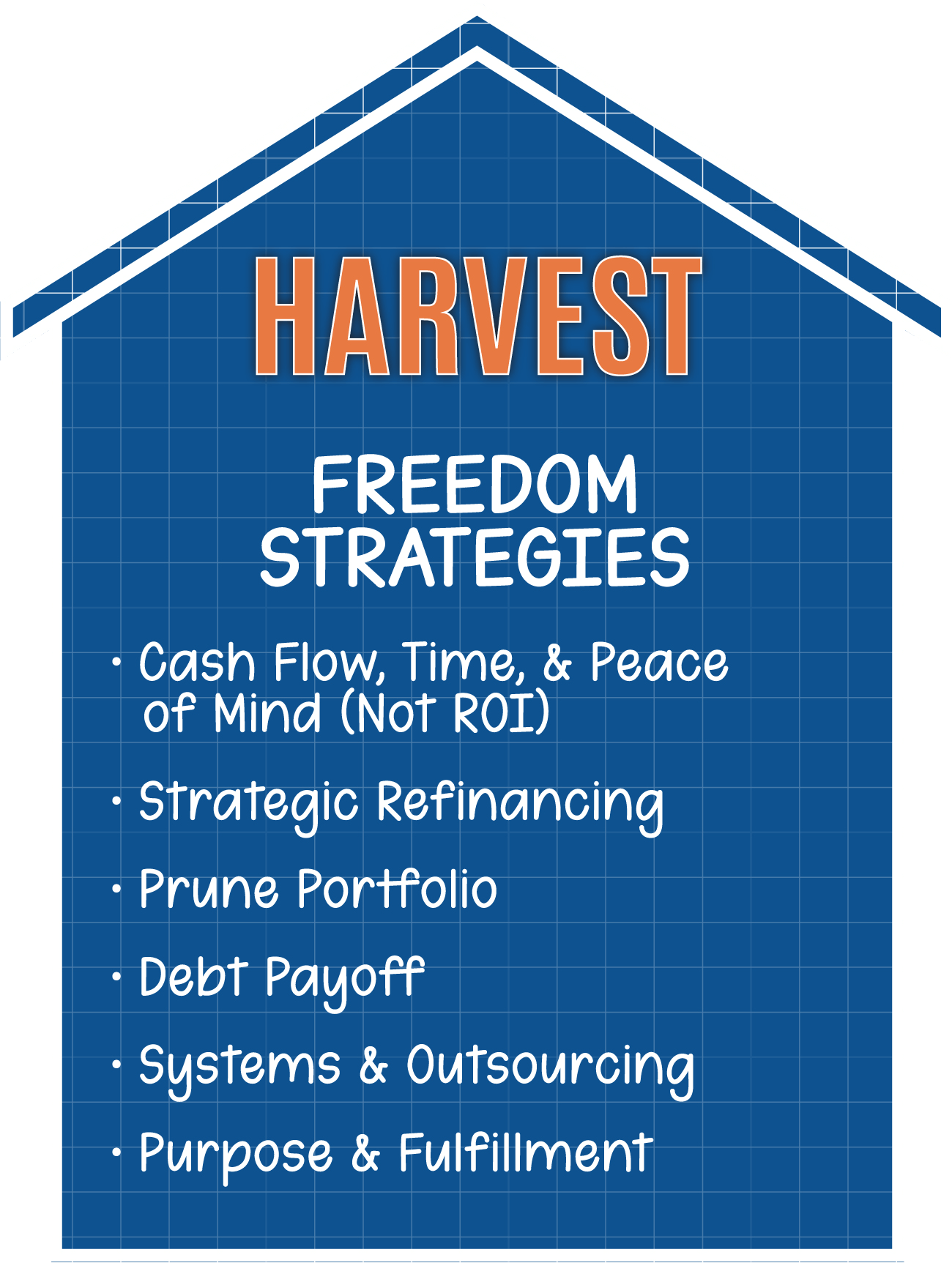
Each phase has different goals and risk tolerances, so make sure your strategy aligns with where you are on your journey.
Step 4: Create Your “Buy Box”

Once you know your strategy, you need to get specific about what kinds of properties you want to buy. Your “buy box” helps you eliminate 99% of available properties and focus only on those that meet your criteria.
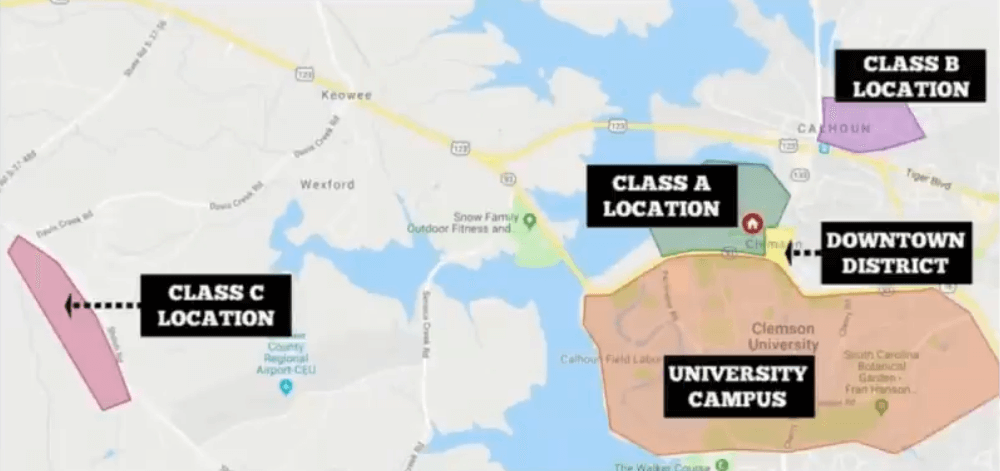
- Start by choosing a target market:
- Look for an “economic sun” – a region with strong jobs, population growth, and economic vitality
- Focus on “satellite” locations around that economic hub – often these offer better affordability while still benefiting from the larger market’s strength
- Look for “path of progress” neighborhoods – areas that are next in line for growth and appreciation
For example, I’ve focused on Class B neighborhoods about a mile from downtown in my college town market. These areas are close enough to benefit from the amenities of the Class A locations but at a more affordable price point.
Step 5: Master These Three Skills for Success
To implement your blueprint successfully, you need to develop expertise in three key areas:
1. Acquiring Properties
Finding good deals requires both patience and strategy. Two effective approaches are:
Level 101: For Beginners
- Get listed leads through the MLS (Multiple Listing Service)
- Build a referral network of real estate agents, wholesalers, and other investors
Level 201: For More Experienced Investors
- Direct-to-seller marketing
- Building lists of potentially motivated sellers
- Direct mail campaigns
- Networking with distressed property owners
The key is to be the first person to a deal or the last person still following up when others have given up.

2. Financing Properties
Think of financing options as tools in your toolbox. Start with one or two tools and expand as you gain experience.
Short-Term Tools (6-24 months)
- Home equity lines of credit
- Cash savings
- Hard money loans
- Private money
Long-Term Tools
- Conventional loans
- DSCR loans (based on the property’s income)
- Seller financing
- Creative financing with partners
Choose the financing tool that matches your strategy and stage of investing.

3. Managing Properties for the Long Run
While many say “you make your money when you buy,” the truth is that you make your real money when you hold. The patience to maintain properties over the long term is where wealth truly builds.
To manage successfully, focus on:
- Building a strong team (property managers, handymen, contractors)
- Creating systems and checklists for every recurring task
- Utilizing property management software
With good systems in place, you can manage a portfolio with just a few hours of work per week, even when living in different parts of the world.
Step 6: The Harvester Phase – Living Off Your Portfolio
Eventually, you’ll reach the point where your real estate portfolio can support your lifestyle. At this stage, your goals shift to maximize:
Cash Flow – You may need to reconfigure your portfolio to increase income
Time – Simplify your portfolio to reduce management headaches
Peace of Mind – Reduce risks that might keep you up at night

Some effective harvester strategies include:
- Strategic refinancing to improve cash flow
- Pruning your portfolio by selling problematic properties
- Paying off debt on select properties
- Creating an “income floor” of debt-free properties that ensures your basic needs are covered
Bringing It All Together
This blueprint provides a clear path to financial freedom through real estate:
- Calculate how much wealth you need using the 6% rule
- Close the gap by buying one property at a time
- Choose the right strategy for your current phase
- Create a specific “buy box” to target the right properties
- Master the skills of acquisition, financing, and management
- Transition to the harvester phase when ready
The journey takes time—typically 10-15 years for most people—but the process works consistently if you stay patient and disciplined. Remember that the tortoise wins the race in real estate. By taking steady, calculated steps and building a solid portfolio one property at a time, you can achieve financial freedom and gain control over your most precious resource: your time.
Get Started Today
If you’re ready to implement this blueprint, I recommend downloading my free Real Estate Investor Toolkit. It includes practical tools like spreadsheets to help you run the numbers, cheat sheets for finding deals and financing properties, and much more.
🖥️ Learn with Coach (Courses, Books & more)
👋 Connect with Me:
SAY THANKS
💜 Leave a review on Apple Podcasts
New to Coach Carson? This Playlist is a collection of our Best of Coach Carson episodes.